Some of Japan’s most useful travel tips aren’t about major attractions—they’re the small everyday customs and conveniences that make traveling easier. This guide compiles the essential, practical details that will keep you moving comfortably and respectfully across the country.
🚾 1. Navigating Public Bathrooms
Finding a restroom while out exploring is incredibly straightforward, and facilities are kept to an exceptionally high standard of cleanliness.
-
Where to Find Them: Public restrooms are freely accessible inside almost all major train stations (typically located inside the ticket gates before you exit the turnstiles). They are also readily available inside major department stores, shopping malls, and most local convenience stores (Lawson, FamilyMart, and 7-Eleven).
-
The Two Styles: You will encounter two styles of restrooms in Japan. Traditional “squat toilets” are common in older train stations or historic public sites, while modern western-style sitting toilets are standard everywhere else. Many public facilities offer a mix of both, with clear symbols on the stall doors.
-
Mastering the Bidet Controls: Your hotel room and most modern public stalls will feature a high-tech electronic bidet toilet. The buttons can look incredibly intimidating.
📱 Pro Tip: Use your smartphone’s Google Translate Live Camera feature to instantly read the labels on the side or wall control panel. Look for the universal square icon for Stop, a wave icon for Wash, and a stylized air icon for Dry.
🪜 2. The Escalator Etiquette Split
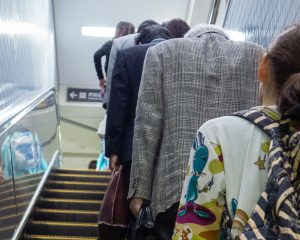
When stepping onto an escalator, you will immediately notice an unspoken social order for standing versus passing.
-
The Tokyo/Eastern Japan Convention: Stand stationary on the left side and leave the right side entirely open for commuters in a hurry to pass you.
-
The Osaka/Western Japan Convention: Stand stationary on the right side and leave the left side open for passing.
-
The Kyoto Blend: Because Kyoto is a massive global cultural intersection, you will frequently see a blend of both habits depending on the crowd flow.
-
⚠️ The Modern Safety Movement: In recent years, Japan’s Ministry of Transport and major rail operators have initiated massive national safety campaigns explicitly asking passengers to stand still on both sides and avoid walking entirely on escalators to prevent accidental falls and collisions with heavy luggage. While the local left/right habits are hard to break, if you see a sign or crowd standing in two rows, simply stay stationary and follow the immediate flow in front of you.
🗑️ 3. The Missing Trash Can Mystery
One of the first things visitors notice is that despite Japan’s immaculately clean streets, physical public trash cans are virtually nonexistent.
- The Vending Machine Solution: While you won’t see trash cans on the sidewalk, you will see dedicated recycling receptacles located directly adjacent to beverage vending machines. These containers are strictly for empty aluminum cans, plastic bottles, and glass jars. Never stuff general household or food trash into them.
-
The Travel Remedy: Always pack a few small, empty plastic bags in your daypack. Store your personal trash in your bag throughout the day and dispose of it in your hotel room at night.
-
Etiquette Reminder: As noted on the hydration page, it is considered impolite and illegal in certain districts to eat or drink while actively walking down the street (Aruki-gui). Stand near the shop or vending machine where you purchased the item, finish it, discard the wrapper there, and then continue walking.
🤧 4. Street Pocket Tissues (Kleenex)
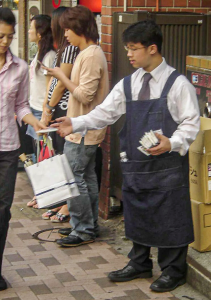
While walking through bustling commercial hubs or near major train station exits, you will frequently see promotional staff handing out small, plastic-wrapped packages of pocket tissues.
-
Go Ahead and Take Them: These are completely free. Businesses use them as a highly effective advertising medium by sliding a promotional flyer into the back pocket of the tissue package.
-
Keep Them Handy: These tissues are highly practical to collect. Some public park restrooms or older facilities may not stock toilet paper, and the promotional street tissues are often significantly softer than standard hotel-provided tissues.
🤖 5. Vending Machines (Jidohanbaiki)
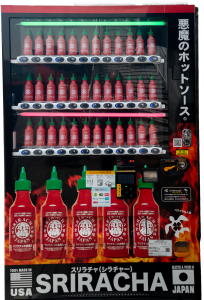
Vending machines are an essential part of Japan’s urban landscape, operating reliably 24/7 on almost every single street corner.
-
Unmatched Variety: Beyond standard ice-cold water, sodas, and juices, machines dynamically stock piping hot canned coffees and teas during cooler months. In specialized areas, you may even find machines dispensing packaged snacks, fresh regional fruits, toiletries, and hot ready-made meals.
-
Seamless Payment: While they accept traditional coins and 1,000 Yen paper bills, the fastest way to pay is cash-free. Simply look for the digital reader card, tap your smartphone or physical transit IC Card (Suica, Pasmo, or ICOCA), and your beverage will drop instantly.
With these everyday tips in mind, you’ll feel much more comfortable navigating daily life throughout Japan.
Moving on to Arriving in Japan.