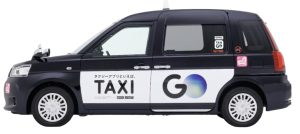
Catching a taxi in Japan is a seamless, premium experience. The vehicles are immaculately clean, the drivers are highly professional, and the service is completely safe. However, the system relies on a few unique local customs and visual cues that every traveler should know before opening the door.
🚕 1. Finding and Hailing a Taxi
You can secure a taxi in Japan using three primary methods:
-
Official Taxi Stands: Located directly outside all airports, major hotels, department stores, and train station exits. Simply look for the designated taxi sign, join the orderly queue, and take the next available cab at the front of the line.
-
Hailing on the Street: Stand safely on the sidewalk along a main street and wave your hand at an oncoming cab.
-
Ride-Hailing Apps: If you want to summon a cab directly to your exact GPS coordinates, download a local app. The absolute king of taxi apps in Japan is GO (which has the widest national coverage). Uber, DiDi, and S.RIDE also operate extensively in major cities. These apps allow you to set your destination in English, track the vehicle, and pay automatically via a linked credit card.
🚦 The Dashboard Color Rule (Crucial Context)
When looking at an approaching taxi’s front windshield dashboard or roof light, the color coding is often the exact opposite of what international travelers expect:
-
🔴 RED Light / “空車” (Kussha): Means VACANT. The cab is empty and ready to pick you up.
-
🟢 GREEN Light / “賃走” (Chinso): Means OCCUPIED. The cab already has a passenger.
🚪 2. Getting In and Out: Hands Off the Doors!
The most famous rule of Japanese taxi etiquette concerns the vehicle doors.
-
The Automatic Door Rule: The rear left passenger door is entirely automated and controlled remotely by the driver via a mechanical lever. When the taxi pulls up to the curb, stand back and do not touch or pull the door handle. Let the door swing open automatically. When you exit at your destination, step out of the vehicle and let the door glide shut on its own.
-
Luggage: If you have heavy luggage or a camera bag, the driver will pop the trunk, step out of the vehicle, and personally load and unload your gear for you.
💴 3. Fares, Payment, and No Tipping
-
The Meter: Taxis run strictly on official meters. Base fares typically start between 500 Yen to 700 Yen for the first kilometer, scaling upward based on distance and time.
-
Late-Night Surcharges: Be aware that a standard 20% late-night premium surcharge automatically applies to the meter between 10:00 PM and 5:00 AM.
-
Payment Methods: Virtually all modern taxis accept cash, major international credit cards, and transit IC Cards (Suica/Pasmo/ICOCA). Look for the accepted payment sticker on the rear passenger window before boarding.
-
Strictly No Tipping: Tipping is not customary and will be politely refused.
🗣️ 4. Communication & Survival Phrases
While drivers in massive tourist hubs may speak basic English, the vast majority of local drivers do not.
📱 The Address Trick: Never rely solely on pronouncing the English name of your hotel. Always open Google Maps or your hotel booking confirmation and show the driver the exact address written in Japanese characters.
Keep these three simple phonetic phrases handy during your ride:
-
“Koko de tomete kudasai.” ➔ Please stop here.
-
“Ikura desu ka?” ➔ How much is it?
-
“Ryoshusho o kudasai.” ➔ Receipt, please.
⚠️ Always Take the Receipt: When you pay, the driver will hand you a small paper receipt (Ryoshusho). Always take it and slip it into your pocket. If you accidentally leave a camera lens, phone, or bag in the back seat, that receipt contains the unique taxi number and dispatch company details, making tracking down your lost item incredibly easy.