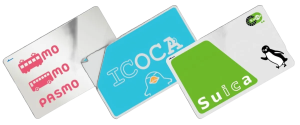
Rechargeable transit cards, known in Japan as IC Cards, are one of the easiest ways to travel around the country. Instead of standing in line to calculate fares and buy individual paper tickets every single time you want to ride a train, subway, or bus, you simply tap your card on the glowing blue reader at the station turnstile and walk right through.
The system automatically calculates the distance and deducts the exact fare from your balance.
💳 One Unified System Nationwide
While different regional transit systems issue their own branded IC cards, they are almost entirely interchangeable.
-
The Big Three: Suica and Pasmo are issued in the greater Tokyo area, while ICOCA is issued in the Osaka/Kyoto (Kansai) region.
-
Use Them Anywhere: A card purchased in Tokyo (like Suica) works flawlessly on the subways in Osaka, and an ICOCA bought in Osaka works perfectly on the Tokyo Metro.
-
More Than Just Transit: IC Cards function like digital cash cards. You can tap them to instantly pay for items at vending machines, convenience stores, coin lockers, and many fast-food restaurants.
📱 The Best Modern Option: Digital Cards via Apple Wallet (iPhones)
If you use an iPhone, you can bypass physical ticket counters completely by adding a digital transit card directly into your phone’s Apple Wallet before you even board your flight.
-
How to Set it Up: open your iPhone’s Wallet App ➔ Tap the “+” sign in the top right ➔ Select Transit Card ➔ Search for “Suica” or “ICOCA” ➔ Choose the amount of funds you want to load, and pay using your phone’s linked credit card.
-
Why it’s King: It is incredibly seamless. You do not need to download a separate Japanese app or open your phone’s lock screen to use it. Just hold the top of your iPhone near the turnstile gate reader, and it taps you through automatically. You can view your balance and reload funds on the fly anytime using your phone’s credit card.
-
⚠️ Credit Card Loading Note: Due to security changes with international payment networks, some foreign-issued Visa cards may fail to load funds inside Apple Wallet. If your Visa card is rejected, try linking a Mastercard or American Express (Amex) card instead, which typically clear without issue.
-
Android Users Note: Digital transit cards on Android are tied to a domestic Japanese hardware system called Osaifu-Keitai. Because Android devices purchased outside of Japan do not have this hardware enabled, international Android users must use a physical card.
⚠️ Availability of Physical IC Cards
Due to a multi-year global semiconductor chip shortage, rail networks have heavily restricted or suspended the sale of standard, permanent physical Suica and Pasmo cards. If you need a physical card, your options depend entirely on where you begin your trip:
If Starting in Tokyo (Narita or Haneda Airports):
You cannot buy a standard card at a regular station vending machine. Instead, you must purchase a special tourist-only physical card called the Welcome Suica.
-
Where to Buy: Available at the JR East Travel Service Centers or dedicated red Welcome Suica vending machines located inside the arrival terminals at Narita and Haneda airports, as well as select major transit hubs like Tokyo Station, Shinjuku, and Shibuya.
-
The Terms: The card requires no upfront 500-Yen deposit, but it comes with strict limitations: it is valid for exactly 28 days, cannot be renewed, and any remaining cash balance on the card is strictly non-refundable. Keep your balance low and spend it down to zero at a convenience store before you leave the country.
If Starting in Osaka or Kyoto (Kansai Airport):
The chip shortage has not heavily impacted western Japan’s physical cards. If you land at Kansai International Airport (KIX) or start your journey in Osaka/Kyoto, you can walk up to any JR station ticket machine and freely purchase a standard physical ICOCA card. It functions identically to a Suica card, has no 28-day expiration limit, and can be kept as a souvenir or saved for future trips to Japan.
Using a digital IC card on your phone? Keeping your phone charged is important. See Electricity & Power for charging and power information while traveling in Japan.